The trap
Many learners think: If the traffic light is green, you may ignore every other sign at the junction, including signs that have nothing to do with priority.
The rule is: Traffic lights override signs THAT REGULATE PRIORITY, not every sign in general. A sign regulating something else (speed, parking) simply remains in force alongside a green light
Challenge
Learners often pick up isolated rules — 'right goes first', 'red means stop', 'a sign beats nothing' — without ever hearing in which order those rules override each other when they collide. That exact collision is what the CBR exam targets: a green light next to a confusing sign, or an officer next to a working traffic light.
Read this section on its own page: Challenge: The real hierarchy: who overrules whom on priority?
The model
The real hierarchy has four levels (RULINGS.md R-h03-1, LAW-VERIFIED): instructions from an officer or traffic controller override traffic lights; traffic lights override signs regulating priority; signs override the ordinary traffic rules.
Read this section on its own page: The model: The real hierarchy: who overrules whom on priority?
Core
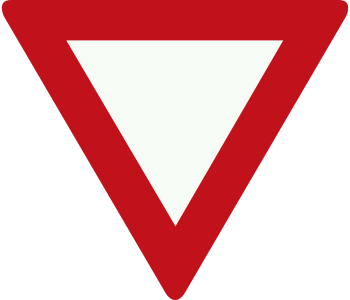
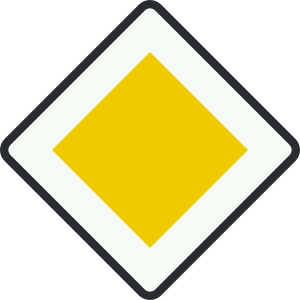
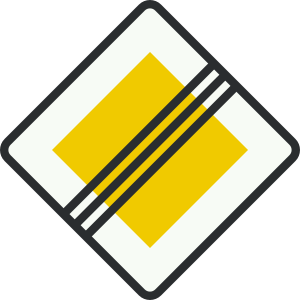
Level 1, the highest: instructions from an officer or traffic controller. A hand signal from an authorised person overrides everything below it, including a red light — precisely because a light can malfunction or an emergency may call for different handling. Level 2: traffic lights, as long as they are working. When the light is active, it regulates priority above every sign — with one precise limit: the light overrides signs THAT REGULATE PRIORITY, not every other sign (a speed sign remains simply in force alongside a green light). Level 3: signs that regulate priority — signs such as B1, B2, B6, B7 and shark's-teeth markings. The book says so itself (p.46): traffic signs are used when the ordinary traffic rules are not sufficient. Level 4, the baseline: the traffic rules themselves, such as the rechts-regel. This applies only when nothing from levels 1 through 3 is present — which is exactly why an equal-rank junction (no marking at all) falls back to precisely this bottom level. A direct application of level 2: whoever enters on green does not have to give way to someone running a red light — the light determines priority, not the other driver's behaviour.
Read this section on its own page: Core: The real hierarchy: who overrules whom on priority?
Why it matters
Without this hierarchy you do not know what to do the moment two rules contradict each other — exactly what happens at a broken traffic light with a traffic controller present, as near Hengelo, or at a junction in Loppersum where you enter on green while someone else is running a red light. Anyone who does not know the hierarchy hesitates at the wrong moment, or wrongly yields to someone else's mistake.
Read this section on its own page: Why it matters: The real hierarchy: who overrules whom on priority?
Source: BABW art. 3 · RVV 1990 art. 15 · RVV 1990 art. 63 · WVW 1994 art. 12 · checked 2026-10-22
Frequently asked questions
‘If the traffic light is green, you may ignore every other sign at the junction, including signs that have nothing to do with priority’ – is that true?
No. Traffic lights override signs THAT REGULATE PRIORITY, not every sign in general. A sign regulating something else (speed, parking) simply remains in force alongside a green light
‘You must always obey a red traffic light, even if a traffic controller or police officer waves you through with a hand signal’ – is that true?
No. Instructions from an authorised officer or traffic controller override traffic lights, which in turn override signs. At a hand signal from the officer, you follow the officer, not the red light
‘The rechts-regel is the foundation of traffic and therefore always overrides a sign or traffic light that says something different’ – is that true?
No. Traffic signs are used precisely WHEN the traffic rules (such as the rechts-regel) are not sufficient. The rechts-regel is the LOWEST rung of the hierarchy: signs and lights always outrank it
‘If you enter a junction on a green light, you must still give way to a driver who has just run a red light, because they are already on the junction’ – is that true?
No. Whoever enters on green does not have to give way to someone running a red light. The light regulates priority; the other driver's traffic violation changes nothing about that
‘When the traffic lights are faulty, the priority signs apply, even if a traffic controller is directing traffic’ – is that true?
No. The order is: traffic controller, then traffic lights, then signs, then the rules; a controller who is present overrides the signs