Theory Mastery

Autoweg and autosnelweg: G3, G1 and the speed rules

What the exam asks here: Ask three drivers at the next petrol station and you get the same answer: '130, right?

14 minutes · 7 sections · 12 questions

The trap

Many learners think: Autoweg (expressway) and autosnelweg (motorway) are the same kind of road, with the same minimum speed and hard shoulder.

The rule is: An autoweg (G3) requires min. 50 km/u and may have at-grade junctions; an autosnelweg (G1) requires min. 60 km/u, always has separated carriageways with a hard shoulder, and never at-grade junctions

Challenge

Ask three drivers at the next petrol station and you get the same answer: '130, right? That's the motorway speed nowadays, isn't it?' The CBR exam designer counts on exactly that reflex. The book does not give a single number — it gives a day clock. During the day a completely different number applies than in the evening.

Read this section on its own page: Challenge: Autoweg and autosnelweg: G3, G1 and the speed rules

The model

During the day, between 6.00 and 19.00, the maximum speed on motorways is 100 km/u (Book p.71). In the evening and at night the legal standard of 130 km/u applies, but signs and matrix boards set 100 or 120 on many stretches — so always check the signs, never assume a blanket 130 (Book p.71: 100, 120 or 130). So on Tuesday afternoon at quarter to two, you are simply in the 100 km/u branch.

Read this section on its own page: The model: Autoweg and autosnelweg: G3, G1 and the speed rules

Core

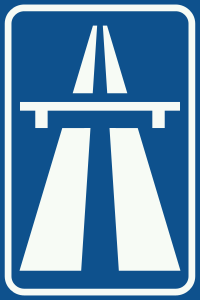
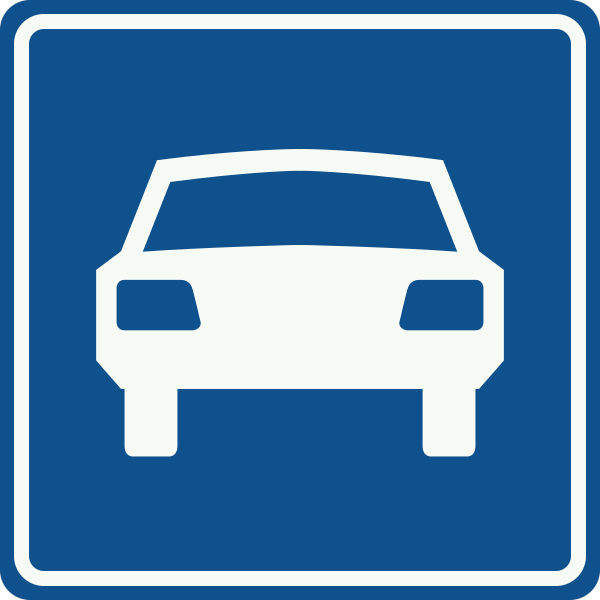
Two signs, two rule sets. Autoweg (sign G3): open only to motor vehicles able and permitted to drive at least 50 km/u; the carriageway can be separated or unseparated, and at-grade junctions or roundabouts occur. Autosnelweg (sign G1): at least 60 km/u, always separated carriageways with at least two lanes, a hard shoulder on the right, never an at-grade junction. On both autowegen and autosnelwegen a fixed list of prohibitions applies: no reversing, no U-turns, no stopping on the carriageway, and no use of the hard shoulder, refuge bay or verge — not with the car, not on foot either — except in an emergency. If the motorway has more than two lanes, trucks and vehicle combinations longer than 7 metres together must use the two right-hand lanes; the left lanes are then not for them, except when merging into position for an exit. This restriction does not apply to an ordinary car.

Read this section on its own page: Core: Autoweg and autosnelweg: G3, G1 and the speed rules

Why it matters

These rules exist because a motorway only stays safe if everyone on it can at least keep up with the flow — a slow vehicle among cars doing 100+ km/u is an obstacle that suddenly stands still. The list of prohibitions prevents exactly the situations where that happens: U-turning, reversing, or stopping in the middle of a road with no at-grade junction, where nobody sees it coming. And the two-right-lanes rule for long combinations keeps the left lanes clear for faster, more manoeuvrable traffic.

Read this section on its own page: Why it matters: Autoweg and autosnelweg: G3, G1 and the speed rules

Active recall

Tuesday afternoon 14:00 on the A32 near Oldeberkoop, the matrix sign shows no separate number. What is the maximum speed?

Read this section on its own page: Active recall: Autoweg and autosnelweg: G3, G1 and the speed rules

Teach back

Explain: what is the difference between the minimum speed at sign G3/G1 and the maximum speed on the motorway, and when does which maximum speed apply?

Read this section on its own page: Teach back: Autoweg and autosnelweg: G3, G1 and the speed rules

Memory hook

Day: 100. Evening/night: 100/120/130. G3 = min. 50 · G1 = min. 60 (that's entry, not a limit). Forbidden: reversing/U-turn/stopping/hard shoulder, except emergency. >2 lanes: truck/long combo stays right.

Read this section on its own page: Memory hook: Autoweg and autosnelweg: G3, G1 and the speed rules

Source: RVV 1990 art. 3 · RVV 1990 art. 21 · checked 2026-10-22

The picture

Autoweg (G3) versus autosnelweg (G1): two signs, two rule setsAutoweg (expressway) — sign G3Autosnelweg (motorway) — sign G1Minimum speed (p.70-71)min. 50 km/umin. 60 km/uCarriagewaysseparated or unseparatedalways separated + hard shoulder on the rightJunctions/roundaboutsat-grade possibleno at-grade junctions
What to look at: G3 autoweg (expressway): min. 50 km/u, may have at-grade junctions. G1 autosnelweg (motorway): min. 60 km/u, always separated carriageways + hard shoulder, no at-grade junctions.

Signs and law

Test yourself

Tuesday afternoon, quarter to two, you are driving on the A32 near Oldeberkoop. The digital matrix sign above the road shows no separate number — it is blank. What is the maximum speed right now?

Show the answer

During the day, between 6.00 and 19.00, the maximum speed on motorways is 100 km/u (Book p.71). In the evening and at night the legal standard of 130 km/u applies, but signs and matrix boards set 100 or 120 on many stretches — so always check the signs, never assume a blanket 130 (Book p.71: 100, 120 or 130). So on Tuesday afternoon at quarter to two, you are simply in the 100 km/u branch.

Exam questions on this topic

Wednesday morning 10:00 on the A32 near Oldeberkoop. The matrix sign above the road shows no separate number. What is the maximum speed right now?

  1. 100 km/u
  2. 130 km/u
  3. 60 km/u
Show the answer

Correct answer: 100 km/u

Why learners get this wrong: On the motorway you may always drive 130 km/u, unless a sign says otherwise.

Open this question

At the on-ramp of the A18 near Ulft there is sign G3. Statement: that requires the same minimum speed as sign G1 on a motorway, namely 60 km/u.

  1. True
  2. False
Show the answer

Correct answer: False

Why learners get this wrong: Autoweg (expressway) and autosnelweg (motorway) are the same kind of road, with the same minimum speed and hard shoulder.

Open this question

On the A32 near Oldeberkoop, traffic has been at a complete standstill for twenty minutes. Your navigation promises a shorter route if you leave the motorway at the next exit. Your car has no breakdown. What do you do?

  1. You reverse at walking pace along the hard shoulder to the exit you just passed
  2. You drive along the hard shoulder to the exit, because after standing still this long that is allowed
  3. You stay in the queue; the hard shoulder is for a breakdown or another emergency
Show the answer

Correct answer: You stay in the queue; the hard shoulder is for a breakdown or another emergency

False — driving slowly does not make it safe. Reversing is forbidden on the motorway, and you only use the hard shoulder with your car in an emergency

Why learners get this wrong: In a stationary traffic jam you may reverse at walking pace along the hard shoulder to reach an exit you have just passed.

Open this question

At the on-ramp of the A18 near Ulft there is sign G3 (autoweg). What is the minimum speed (in km/u) a motor vehicle must be able and permitted to drive to be allowed onto this road?

Show the answer

Correct answer: 50 km/u

Correct: 50.0 km/u.

Open this question

You are driving on the A32 near Oldeberkoop, everything is normal, no breakdown, no accident. Which of the following actions are forbidden right now? (select all that apply)

  1. Reversing on the carriageway
  2. Making a U-turn on the carriageway
  3. Using the hard shoulder with the car in an emergency (for example a breakdown)
  4. Stopping on the carriageway
Show the answer

Correct answer: Reversing on the carriageway; Making a U-turn on the carriageway; Stopping on the carriageway

False — ly selected

Why learners get this wrong: In a traffic jam you may use the hard shoulder with your car to avoid the queue.

Open this question

The carriageway of the A32 near Oldeberkoop has three lanes. Statement: an ordinary car must, just like a truck, always use the two right-hand lanes there.

  1. True
  2. False
Show the answer

Correct answer: False

Why learners get this wrong: With more than two lanes, no vehicle at all may use the left-hand lanes, not even an ordinary car.

Open this question

Tuesday afternoon 14:00 on the A32 near Oldeberkoop, the matrix sign shows no separate number. What is the maximum speed?

  1. 100 km/u
  2. 130 km/u
  3. 60 km/u
Show the answer

Correct answer: 100 km/u

Day (6-19h): 100 · evening/night: 100/120/130

Why learners get this wrong: On the motorway you may always drive 130 km/u, unless a sign says otherwise.

Open this question

During the day (6.00-19.00) the maximum speed is 100 km/u; in the evening and at night it is 100, 120 or 130 km/u. 130 is not the default, it is the highest of three possible evening/night values.

  1. False
  2. True
Show the answer

Correct answer: True

During the day (6.00-19.00) the maximum speed is 100 km/u; in the evening and at night it is 100, 120 or 130 km/u. 130 is not the default, it is the highest of three possible evening/night values

Why learners get this wrong: On the motorway you may always drive 130 km/u, unless a sign says otherwise.

Open this question

About Autoweg and autosnelweg: G3, G1 and the speed rules: which statement is WRONG?

  1. Using the hard shoulder, refuge bay or verge with the car is forbidden, except in an emergency (for example a breakdown).
  2. During the day (6.00-19.00) the maximum speed is 100 km/u; in the evening and at night it is 100, 120 or 130 km/u. 130 is not the default, it is the highest of three possible evening/night values.
  3. 'able and permitted to drive 50/60 km/u' is an access requirement for the vehicle (a floor), not a speed limit. The maximum speed on motorways is stated separately: 100 km/u during the day, 100/120/130 in the evening and at night.
  4. Autoweg (expressway) and autosnelweg (motorway) are the same kind of road, with the same minimum speed and hard shoulder.
Show the answer

Correct answer: Autoweg (expressway) and autosnelweg (motorway) are the same kind of road, with the same minimum speed and hard shoulder.

An autoweg (G3) requires min. 50 km/u and may have at-grade junctions; an autosnelweg (G1) requires min. 60 km/u, always has separated carriageways with a hard shoulder, and never at-grade junctions

Why learners get this wrong: In a traffic jam you may use the hard shoulder with your car to avoid the queue.

Open this question

About Autoweg and autosnelweg: G3, G1 and the speed rules: which statement is WRONG?

  1. The 50 km/u at sign G3 and the 60 km/u at sign G1 are maximum speeds for that road.
  2. An autoweg (G3) requires min. 50 km/u and may have at-grade junctions; an autosnelweg (G1) requires min. 60 km/u, always has separated carriageways with a hard shoulder, and never at-grade junctions.
  3. During the day (6.00-19.00) the maximum speed is 100 km/u; in the evening and at night it is 100, 120 or 130 km/u. 130 is not the default, it is the highest of three possible evening/night values.
  4. Using the hard shoulder, refuge bay or verge with the car is forbidden, except in an emergency (for example a breakdown).
Show the answer

Correct answer: The 50 km/u at sign G3 and the 60 km/u at sign G1 are maximum speeds for that road.

'able and permitted to drive 50/60 km/u' is an access requirement for the vehicle (a floor), not a speed limit. The maximum speed on motorways is stated separately: 100 km/u during the day, 100/120/130 in the evening and at night

Why learners get this wrong: Autoweg (expressway) and autosnelweg (motorway) are the same kind of road, with the same minimum speed and hard shoulder.

Open this question

All practice questions of this topic

Frequently asked questions

‘Autoweg (expressway) and autosnelweg (motorway) are the same kind of road, with the same minimum speed and hard shoulder’ – is that true?

No. An autoweg (G3) requires min. 50 km/u and may have at-grade junctions; an autosnelweg (G1) requires min. 60 km/u, always has separated carriageways with a hard shoulder, and never at-grade junctions

‘On the motorway you may always drive 130 km/u, unless a sign says otherwise’ – is that true?

No. During the day (6.00-19.00) the maximum speed is 100 km/u; in the evening and at night it is 100, 120 or 130 km/u. 130 is not the default, it is the highest of three possible evening/night values

‘The 50 km/u at sign G3 and the 60 km/u at sign G1 are maximum speeds for that road’ – is that true?

No. 'able and permitted to drive 50/60 km/u' is an access requirement for the vehicle (a floor), not a speed limit. The maximum speed on motorways is stated separately: 100 km/u during the day, 100/120/130 in the evening and at night

‘In a traffic jam you may use the hard shoulder with your car to avoid the queue’ – is that true?

No. Using the hard shoulder, refuge bay or verge with the car is forbidden, except in an emergency (for example a breakdown). Losing time in a traffic jam is not an emergency

‘With more than two lanes, no vehicle at all may use the left-hand lanes, not even an ordinary car’ – is that true?

No. The duty to use only the two right-hand lanes when there are more than two lanes applies specifically to trucks and to vehicle-plus-trailer combinations longer than 7 metres together. An ordinary car may use every lane
Related topics

Open in the app