Theory Mastery

One-way streets, narrow single carriageways, separated carriageways and service roads

What the exam asks here: Your passenger immediately says: 'Don't, on a one-way street you can't reverse at all.' That sounds logical — the whole street points one way.

14 minutes · 7 sections · 14 questions

The trap

Many learners think: On a one-way street you may not reverse at all, not even to back into a parking space.

The rule is: The prohibition applies to reversing as a driving manoeuvre along the road and to U-turns; backing into a parking space is explicitly still allowed

Challenge

Your passenger immediately says: 'Don't, on a one-way street you can't reverse at all.' That sounds logical — the whole street points one way. But the rule forbids a specific manoeuvre, not every backward movement of the car. There is an exception in it that most students miss.

Read this section on its own page: Challenge: One-way streets, narrow single carriageways, separated carriageways and service roads

The model

On a one-way street you may not reverse and may not make a U-turn (Book p.61-62) — that prohibition concerns driving against or across the fixed direction of travel. Backing into a parking bay is still allowed: you do not leave the direction of travel, you stop in a bay next to the carriageway.

Read this section on its own page: The model: One-way streets, narrow single carriageways, separated carriageways and service roads

Core

You may only enter a one-way street from one side; reversing and U-turns are forbidden, backing into a parking bay is not (Book p.61-62). Outside the built-up area, a narrow single carriageway demands extra attention for the edge: watch out for a sharp edge and/or a lower-lying verge. If your right-hand wheels leave the road surface, you quickly lose control of your steering (Book p.64). On a road with separated carriageways — for example by a central reservation — a sign usually shows which carriageway to follow. If there is no sign, the fallback rule applies: keep right, so follow the right-hand carriageway (Book p.66). A ventweg (also called a parallelweg) runs alongside the main carriageway, marked by sign C5. The main road is for fast, through traffic; the ventweg is for slow, local traffic (Book p.66-67).

Read this section on its own page: Core: One-way streets, narrow single carriageways, separated carriageways and service roads

Why it matters

These rules protect against exactly the situations where a driver misjudges the road's direction of travel: reversing or making a U-turn on a one-way street puts you head-on against traffic that expects one direction; picking the wrong carriageway on a separated road with no sign does the same. And on narrow roads outside the built-up area, the verge is often lower than the road surface without warning — one brief moment of inattention, and the car is already tipping before you can correct.

Read this section on its own page: Why it matters: One-way streets, narrow single carriageways, separated carriageways and service roads

Active recall

On the narrow one-way street in Beuningen a parking bay becomes free, exactly big enough to back into. May you carry out that manoeuvre?

Read this section on its own page: Active recall: One-way streets, narrow single carriageways, separated carriageways and service roads

Teach back

Explain: what is and is not allowed on a one-way street, what is the risk on a narrow single carriageway outside the built-up area, and how do you know which carriageway to follow on a road with separated carriageways?

Read this section on its own page: Teach back: One-way streets, narrow single carriageways, separated carriageways and service roads

Memory hook

One-way street: no reversing/U-turns, backing into a bay is fine. Narrow road: edge = quick loss of control. Separated carriageways: sign decides, otherwise keep right. Ventweg (C5) = slow/local, main road = fast/through.

Read this section on its own page: Memory hook: One-way streets, narrow single carriageways, separated carriageways and service roads

Source: RVV 1990 art. 3 · checked 2026-10-22

The picture

One-way street: forbidden manoeuvre versus allowed exceptionForbidden (p.61-62)Still allowed (p.61-62)Manoeuvrereversing along the road · making a U-turnbacking into a parking bayWhyit works against or across the fixed direction of travelyou don't leave the direction of travel, you stop off the carriageway in a bay
What to look at: One-way street: reversing along the road and making a U-turn are forbidden; backing into a parking bay is still allowed.

Signs and law

Test yourself

Saturday morning, weekly market in Beuningen, you are driving on a narrow one-way street toward the centre. A parking bay along the kerb just ahead becomes free — exactly big enough to back into. Is that allowed on a one-way street, or is any backward movement forbidden?

Show the answer

On a one-way street you may not reverse and may not make a U-turn (Book p.61-62) — that prohibition concerns driving against or across the fixed direction of travel. Backing into a parking bay is still allowed: you do not leave the direction of travel, you stop in a bay next to the carriageway.

Exam questions on this topic

About One-way streets, narrow single carriageways, separated carriageways and service roads: which statements are correct? (multiple answers possible)

  1. On a one-way street you may reverse along the carriageway to a turning you missed.
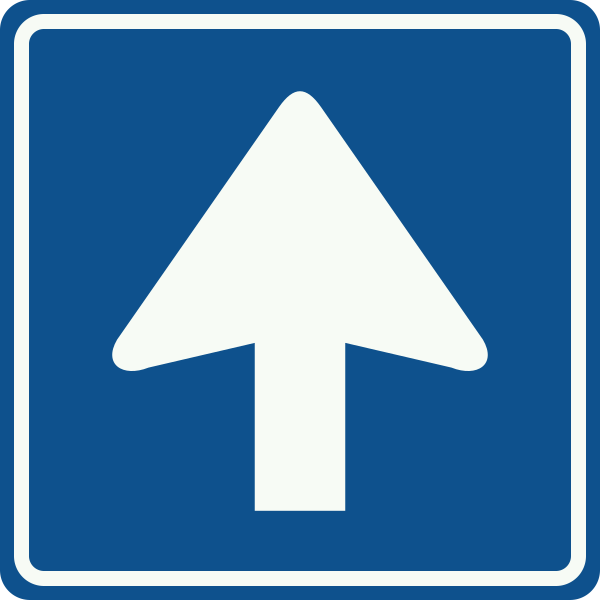
  2. C4 = one-way road: traffic in the SIDE STREET drives in the arrow's direction — a rectangular information sign about that street, not a command for your direction; commands are round (D series).
  3. On narrow single-carriageway roads outside the built-up area: watch out for a sharp road edge and/or lower verge; if your right-hand wheels leave the road, you quickly lose control of the steering.
  4. Sign C4 means the side street is closed; the arrow shows which way the diversion goes.
Show the answer

Correct answer: C4 = one-way road: traffic in the SIDE STREET drives in the arrow's direction — a rectangular information sign about that street, not a command for your direction; commands are round (D series).; On narrow single-carriageway roads outside the built-up area: watch out for a sharp road edge and/or lower verge; if your right-hand wheels leave the road, you quickly lose control of the steering.

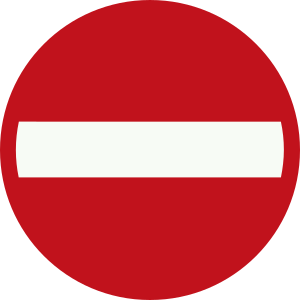
C3/C4 are the open side of the one-way road: entering is allowed, in the arrow's direction; the closed end carries the round C2

Why learners get this wrong: On a one-way street you may reverse along the carriageway to a turning you missed.

Open this question

About One-way streets, narrow single carriageways, separated carriageways and service roads: which statement is correct?

  1. If your right-hand wheels leave the asphalt, the only risk is damage to tyres or rims; the steering stays under control.
  2. A service road (ventweg) next to the main carriageway is simply an extra lane you can use for fast, through traffic.
  3. The prohibition applies to reversing as a driving manoeuvre along the road and to U-turns; backing into a parking space is explicitly still allowed.
  4. If your right-hand wheels leave the road surface on a narrow single carriageway, you can simply steer calmly back to the middle.
Show the answer

Correct answer: The prohibition applies to reversing as a driving manoeuvre along the road and to U-turns; backing into a parking space is explicitly still allowed.

The prohibition applies to reversing as a driving manoeuvre along the road and to U-turns; backing into a parking space is explicitly still allowed

Why learners get this wrong: If your right-hand wheels leave the asphalt, the only risk is damage to tyres or rims; the steering stays under control.

Open this question

On the narrow one-way street in Beuningen a parking bay becomes free, exactly big enough to back into. May you carry out that manoeuvre?

  1. Yes, backing into a parking bay is allowed, even on a one-way street
  2. No, on a one-way street any backward movement is forbidden
Show the answer

Correct answer: Yes, backing into a parking bay is allowed, even on a one-way street

The prohibition applies to reversing along the road and U-turns; backing into a parking bay is explicitly allowed

Why learners get this wrong: On a one-way street you may not reverse at all, not even to back into a parking space.

Open this question

About One-way streets, narrow single carriageways, separated carriageways and service roads: which statement is WRONG?

  1. A sign usually indicates which carriageway to follow; if there are no signs, you must keep right and therefore follow the right-hand carriageway.
  2. The main road is intended for fast and through traffic, the ventweg for slow and local traffic (sign C5 at the entrance).
  3. The prohibition applies to reversing as a driving manoeuvre along the road and to U-turns; backing into a parking space is explicitly still allowed.
  4. If your right-hand wheels leave the road surface on a narrow single carriageway, you can simply steer calmly back to the middle.
Show the answer

Correct answer: If your right-hand wheels leave the road surface on a narrow single carriageway, you can simply steer calmly back to the middle.

Watch out for a sharp edge and/or a lower-lying verge on narrow single carriageways outside the built-up area; if your right-hand wheels leave the road, you quickly lose control of your steering

Why learners get this wrong: On a road with separated carriageways and no sign, you may choose for yourself which carriageway to follow.

Open this question

Watch out for a sharp edge and/or a lower-lying verge on narrow single carriageways outside the built-up area; if your right-hand wheels leave the road, you quickly lose control of your steering.

  1. False
  2. True
Show the answer

Correct answer: True

Watch out for a sharp edge and/or a lower-lying verge on narrow single carriageways outside the built-up area; if your right-hand wheels leave the road, you quickly lose control of your steering

Why learners get this wrong: If your right-hand wheels leave the road surface on a narrow single carriageway, you can simply steer calmly back to the middle.

Open this question

About One-way streets, narrow single carriageways, separated carriageways and service roads: which statement is correct?

  1. The main road is intended for fast and through traffic, the ventweg for slow and local traffic (sign C5 at the entrance).
  2. Sign C4 (blue rectangle, sideways arrow) obliges you to turn the way the arrow points at the junction.
  3. If your right-hand wheels leave the road surface on a narrow single carriageway, you can simply steer calmly back to the middle.
  4. If your right-hand wheels leave the asphalt, the only risk is damage to tyres or rims; the steering stays under control.
Show the answer

Correct answer: The main road is intended for fast and through traffic, the ventweg for slow and local traffic (sign C5 at the entrance).

The main road is intended for fast and through traffic, the ventweg for slow and local traffic (sign C5 at the entrance)

Why learners get this wrong: Sign C4 (blue rectangle, sideways arrow) obliges you to turn the way the arrow points at the junction.

Open this question

About One-way streets, narrow single carriageways, separated carriageways and service roads: which statement is WRONG?

  1. A sign usually indicates which carriageway to follow; if there are no signs, you must keep right and therefore follow the right-hand carriageway.
  2. The prohibition applies to reversing as a driving manoeuvre along the road and to U-turns; backing into a parking space is explicitly still allowed.
  3. Watch out for a sharp edge and/or a lower-lying verge on narrow single carriageways outside the built-up area; if your right-hand wheels leave the road, you quickly lose control of your steering.
  4. A service road (ventweg) next to the main carriageway is simply an extra lane you can use for fast, through traffic.
Show the answer

Correct answer: A service road (ventweg) next to the main carriageway is simply an extra lane you can use for fast, through traffic.

The main road is intended for fast and through traffic, the ventweg for slow and local traffic (sign C5 at the entrance)

Why learners get this wrong: On a road with separated carriageways and no sign, you may choose for yourself which carriageway to follow.

Open this question

On the narrow one-way street in Beuningen, during the weekly market, a parking bay becomes free. Statement: you may never reverse there, not even to back into the bay.

  1. True
  2. False
Show the answer

Correct answer: False

Why learners get this wrong: On a one-way street you may not reverse at all, not even to back into a parking space.

Open this question

On the provincial road near Renkum, outside the built-up area, the carriageway is narrow and the verge is lower than the road surface. Your right-hand wheels briefly leave the asphalt. What is the biggest danger here?

  1. Mainly damage to your tyres or rims; the steering stays under control
  2. Little: you simply steer calmly back to the middle and then carry on
  3. That you quickly lose control of the steering because of the sharp asphalt edge or low verge
Show the answer

Correct answer: That you quickly lose control of the steering because of the sharp asphalt edge or low verge

False — the danger is not in the tyres but in the steering. If your right-hand wheels leave the asphalt at a sharp edge or lower verge, you quickly lose control of the steering

Why learners get this wrong: If your right-hand wheels leave the asphalt, the only risk is damage to tyres or rims; the steering stays under control.

Open this question

On the road to the centre of Beuningen the carriageway is divided in two by a central reservation. You see no sign anywhere indicating a carriageway. Which carriageway do you follow?

  1. Whichever one, without a sign you may choose for yourself
  2. The right-hand carriageway, because without a sign keep-right applies
Show the answer

Correct answer: The right-hand carriageway, because without a sign keep-right applies

Why learners get this wrong: On a road with separated carriageways and no sign, you may choose for yourself which carriageway to follow.

Open this question

All practice questions of this topic

Frequently asked questions

‘On a one-way street you may not reverse at all, not even to back into a parking space’ – is that true?

No. The prohibition applies to reversing as a driving manoeuvre along the road and to U-turns; backing into a parking space is explicitly still allowed

‘If your right-hand wheels leave the road surface on a narrow single carriageway, you can simply steer calmly back to the middle’ – is that true?

No. Watch out for a sharp edge and/or a lower-lying verge on narrow single carriageways outside the built-up area; if your right-hand wheels leave the road, you quickly lose control of your steering

‘On a road with separated carriageways and no sign, you may choose for yourself which carriageway to follow’ – is that true?

No. A sign usually indicates which carriageway to follow; if there are no signs, you must keep right and therefore follow the right-hand carriageway

‘A service road (ventweg) next to the main carriageway is simply an extra lane you can use for fast, through traffic’ – is that true?

No. The main road is intended for fast and through traffic, the ventweg for slow and local traffic (sign C5 at the entrance)

‘Sign C4 (blue rectangle, sideways arrow) obliges you to turn the way the arrow points at the junction’ – is that true?

No. C4 = one-way road: traffic in the SIDE STREET drives in the arrow's direction — a rectangular information sign about that street, not a command for your direction; commands are round (D series)
Related topics

Open in the app