Theory Mastery

Unequal-rank junction: B6, B7 and the priority road

What the exam asks here: Many learners equate 'give way' with 'therefore stop', and so brake at every priority sign, even where it is not needed — or worse, forget to stop exactly where it is required.

14 minutes · 7 sections · 11 questions

The trap

Many learners think: Sign B6 means you are required to come to a full stop before the junction.

The rule is: 'If you are required to stop, the sign is not B6 but B7.' B6 = give way to crossing traffic without a mandatory full stop; only B7 forces a stop

Challenge

Many learners equate 'give way' with 'therefore stop', and so brake at every priority sign, even where it is not needed — or worse, forget to stop exactly where it is required. The book draws a sharp distinction here between two signs that look alike.

Read this section on its own page: Challenge: Unequal-rank junction: B6, B7 and the priority road

The model

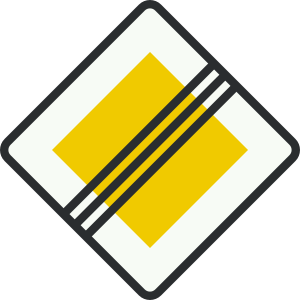
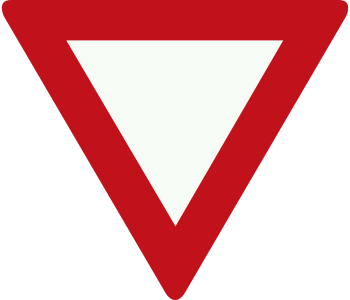
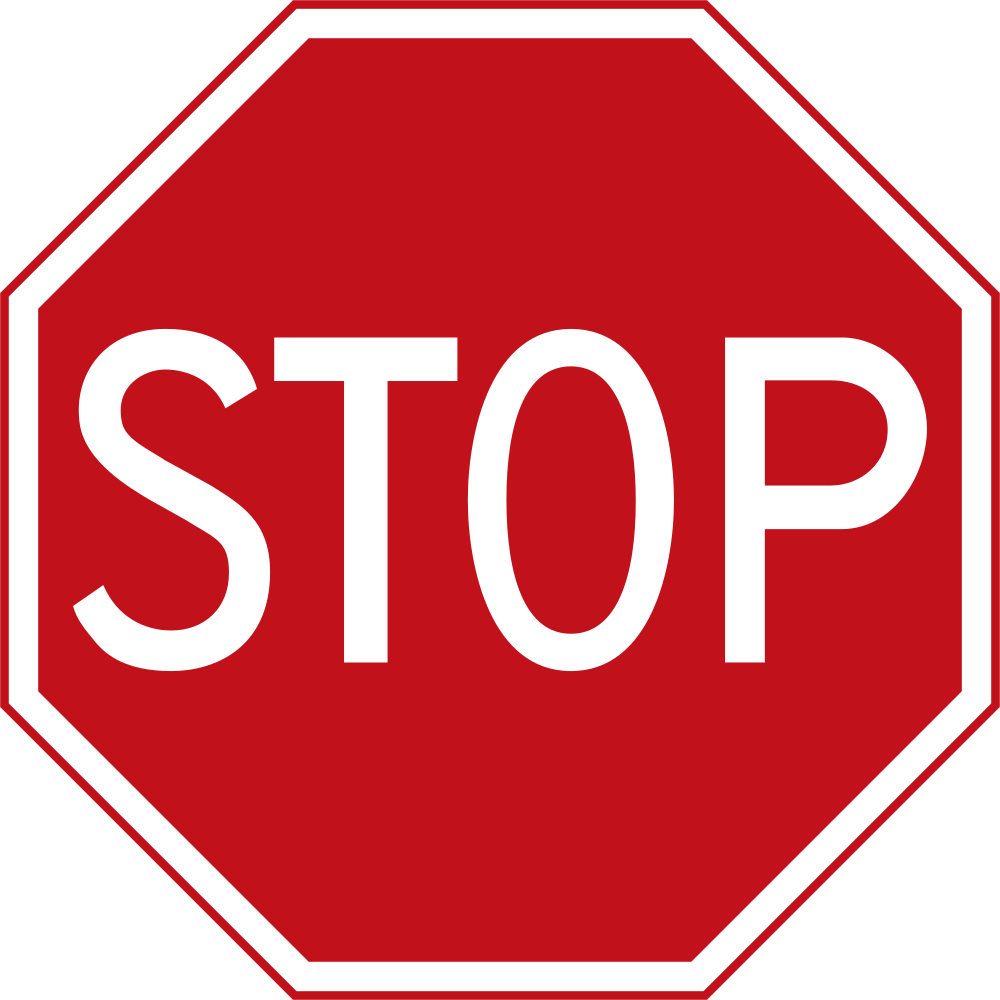
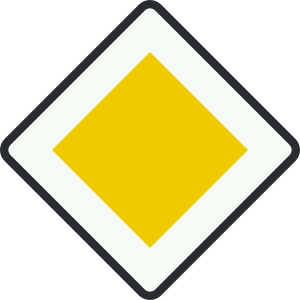
Sign B6: give way — no mandatory full stop (Book p.107). Sign B7: mandatory stop and give way. Sign B1 puts you on a priority road, until sign B2 marks its end.

Read this section on its own page: The model: Unequal-rank junction: B6, B7 and the priority road

Core

An unequal-rank junction always has a sign regulating priority (Book p.107-108) — that is exactly what distinguishes it from the equal-rank junction of the previous atom. Sign B6 obliges you to give way to drivers on the crossing road, but does not prescribe a full stop: if the road is clear, you may continue at reduced speed. Sign B7 does require a full stop, even if the road looks empty. Sign B1 marks the start of a priority road: all traffic from side roads must give way to you until sign B2 marks the end of that priority road — B2 is therefore just as important as B1. One final variant: at a junction of an unpaved road with a paved road, the driver on the unpaved road gives way to the driver on the paved road, even if the latter is a horse rider.

Read this section on its own page: Core: Unequal-rank junction: B6, B7 and the priority road

Why it matters

Confusing B6 and B7 costs seconds on the road that real traffic does not have to spare: someone who needlessly comes to a full stop at a B6 surprises the car behind them; someone who rolls through a B7 without stopping drives straight into crossing traffic that is not expecting it. On country lanes near Zaltbommel, where sight lines are often limited by rows of trees, that difference counts double.

Read this section on its own page: Why it matters: Unequal-rank junction: B6, B7 and the priority road

Active recall

On a polder road near Stavoren you are driving on an unpaved track and approach a paved road with no sign at all. A horse rider is coming from your left on the paved road. What applies?

Read this section on its own page: Active recall: Unequal-rank junction: B6, B7 and the priority road

Teach back

Explain: what is the difference between sign B6 and sign B7, and where does the priority granted by sign B1 end?

Read this section on its own page: Teach back: Unequal-rank junction: B6, B7 and the priority road

Memory hook

B6: give way, no stop. B7: give way + stop. B1→B2: priority road. Unpaved gives way to paved.

Read this section on its own page: Memory hook: Unequal-rank junction: B6, B7 and the priority road

Source: RVV 1990 art. 15 · checked 2026-10-22

The picture

Unequal-rank junction: which sign, which duty? (p.107-108)B6B7Dutygive way to crossing trafficcome to a full stop AND give wayFull stop required?noyesRelated signsB1 = start of priority road, B2 = end of priority roadn/a — B7 stands on its own
What to look at: B6: give way, no full stop required. B7: mandatory stop. B1: you are on a priority road. B2: that priority road ends here.

Signs and law

Test yourself

On the N321 near Zaltbommel you approach a junction with a triangular sign. A car is coming from the left on the crossing road. Must you come to a full stop before continuing?

Show the answer

Sign B6: give way — no mandatory full stop (Book p.107). Sign B7: mandatory stop and give way. Sign B1 puts you on a priority road, until sign B2 marks its end.

Exam questions on this topic

About Unequal-rank junction: B6, B7 and the priority road: which statement is WRONG?

  1. Sign B1 applies 'until sign B2 indicates the end of the priority road'.
  2. Sign B6 means you are required to come to a full stop before the junction.
  3. At a junction of an unpaved road with a paved road, the driver on the unpaved road gives way to the one on the paved road, even if that is a horse rider.
  4. At a junction of an unpaved and a paved road, the driver on the unpaved road gives way to the road user on the paved road, even if that is a horse rider.
Show the answer

Correct answer: Sign B6 means you are required to come to a full stop before the junction.

'If you are required to stop, the sign is not B6 but B7.' B6 = give way to crossing traffic without a mandatory full stop; only B7 forces a stop

Why learners get this wrong: Once you have passed sign B1 (start of the priority road), you keep priority at every following junction until the end of your journey.

Open this question

Sign B6 means you are required to come to a full stop before the junction.

  1. False
  2. True
Show the answer

Correct answer: False

'If you are required to stop, the sign is not B6 but B7.' B6 = give way to crossing traffic without a mandatory full stop; only B7 forces a stop

Why learners get this wrong: Sign B6 means you are required to come to a full stop before the junction.

Open this question

On a polder road near Stavoren you are driving on an unpaved track and approach a paved road with no sign at all. A horse rider is coming from your left on the paved road. What applies?

  1. You give way to the rider, even though it is not a car
  2. You go first, because you reach the junction sooner
Show the answer

Correct answer: You give way to the rider, even though it is not a car

Unpaved gives way to paved, even to a rider

Why learners get this wrong: At a junction of an unpaved road with a paved road, the driver on the unpaved road has priority, because that road is harder to drive on.

Open this question

About Unequal-rank junction: B6, B7 and the priority road: which statement is correct?

  1. A horse rider does not drive a vehicle, so from an unpaved road you only have to give way to vehicles on the paved road, not to a rider.
  2. Sign B6 means you are required to come to a full stop before the junction.
  3. Sign B1 applies 'until sign B2 indicates the end of the priority road'.
  4. At a junction of an unpaved road with a paved road, the driver on the unpaved road has priority, because that road is harder to drive on.
Show the answer

Correct answer: Sign B1 applies 'until sign B2 indicates the end of the priority road'.

Sign B1 applies 'until sign B2 indicates the end of the priority road'. Priority on a priority road is therefore a bounded stretch between B1 and B2, not a permanent status

Why learners get this wrong: A horse rider does not drive a vehicle, so from an unpaved road you only have to give way to vehicles on the paved road, not to a rider.

Open this question

About Unequal-rank junction: B6, B7 and the priority road: which statement is WRONG?

  1. 'If you are required to stop, the sign is not B6 but B7.' B6 = give way to crossing traffic without a mandatory full stop; only B7 forces a stop.
  2. Once you have passed sign B1 (start of the priority road), you keep priority at every following junction until the end of your journey.
  3. At a junction of an unpaved and a paved road, the driver on the unpaved road gives way to the road user on the paved road, even if that is a horse rider.
  4. At a junction of an unpaved road with a paved road, the driver on the unpaved road gives way to the one on the paved road, even if that is a horse rider.
Show the answer

Correct answer: Once you have passed sign B1 (start of the priority road), you keep priority at every following junction until the end of your journey.

Sign B1 applies 'until sign B2 indicates the end of the priority road'. Priority on a priority road is therefore a bounded stretch between B1 and B2, not a permanent status

Why learners get this wrong: Sign B6 means you are required to come to a full stop before the junction.

Open this question

On the N321 near Zaltbommel you approach a junction with sign B6. The crossing road is clear at that moment. What do you do?

  1. Drive on without checking the crossing road, since it is clear anyway
  2. Continue at reduced speed, without coming to a full stop
  3. Come to a full stop, because every priority sign requires a stop
Show the answer

Correct answer: Continue at reduced speed, without coming to a full stop

Why learners get this wrong: If the crossing road looks empty, you may drive on at sign B6 without paying attention to that road.

Open this question

Near Breda you pass sign B1. Statement: from that point you keep priority at every following junction until the end of your journey, regardless of any further signage.

  1. True
  2. False
Show the answer

Correct answer: False

Why learners get this wrong: Once you have passed sign B1 (start of the priority road), you keep priority at every following junction until the end of your journey.

Open this question

On an unpaved sandy track near Stavoren you approach a junction with a paved polder road. There are no signs and no shark's teeth. On the paved road a cyclist approaches from the right and a horse rider from the left. What do you do?

  1. You let both the cyclist and the rider on the paved road go first
  2. You let only the cyclist go; a horse rider does not drive a vehicle
  3. You go first, because from the sandy track it is harder to get moving
Show the answer

Correct answer: You let both the cyclist and the rider on the paved road go first

False — you think whoever is on the harder road gets priority. It is the other way round: at a junction of an unpaved and a paved road, you give way from the unpaved road to everyone on the paved road

Why learners get this wrong: A horse rider does not drive a vehicle, so from an unpaved road you only have to give way to vehicles on the paved road, not to a rider.

Open this question

Which statements about sign B6 and sign B7 are correct? (multiple answers possible)

  1. B6 and B7 both require a full stop
  2. B7 requires a full stop and giving way
  3. B6 requires giving way, no full stop
  4. You may ignore B6 if the crossing road appears empty
Show the answer

Correct answer: B7 requires a full stop and giving way; B6 requires giving way, no full stop

Why learners get this wrong: Sign B6 means you are required to come to a full stop before the junction.

Open this question

You drive onto a priority road from Breda. Put the assessment of your priority position in the correct order.

Answer options: Assume side roads without their own sign give way to you · Once you see B2: your priority ends, reassess the next junction from scratch · Recognise sign B1: you start on a priority road · Watch for sign B2 at every following junction

Show the answer

Correct answer: Recognise sign B1: you start on a priority road; Assume side roads without their own sign give way to you; Watch for sign B2 at every following junction; Once you see B2: your priority ends, reassess the next junction from scratch

B1 opens the priority road, which applies at every junction with no sign of its own, until B2 marks the end — after that it is a normal assessment again.

Open this question

All practice questions of this topic

Frequently asked questions

‘Sign B6 means you are required to come to a full stop before the junction’ – is that true?

No. 'If you are required to stop, the sign is not B6 but B7.' B6 = give way to crossing traffic without a mandatory full stop; only B7 forces a stop

‘Once you have passed sign B1 (start of the priority road), you keep priority at every following junction until the end of your journey’ – is that true?

No. Sign B1 applies 'until sign B2 indicates the end of the priority road'. Priority on a priority road is therefore a bounded stretch between B1 and B2, not a permanent status

‘At a junction of an unpaved road with a paved road, the driver on the unpaved road has priority, because that road is harder to drive on’ – is that true?

No. At a junction of an unpaved road with a paved road, the driver on the unpaved road gives way to the one on the paved road, even if that is a horse rider

‘A horse rider does not drive a vehicle, so from an unpaved road you only have to give way to vehicles on the paved road, not to a rider’ – is that true?

No. At a junction of an unpaved and a paved road, the driver on the unpaved road gives way to the road user on the paved road, even if that is a horse rider

‘If the crossing road looks empty, you may drive on at sign B6 without paying attention to that road’ – is that true?

No. B6 still requires you to assess whether the road is clear before continuing
Related topics

Open in the app