Theory Mastery

The seven categories of traffic signs (appendix 1)

What the exam asks here: You count five signs and think: five categories.

14 minutes · 7 sections · 16 questions

The trap

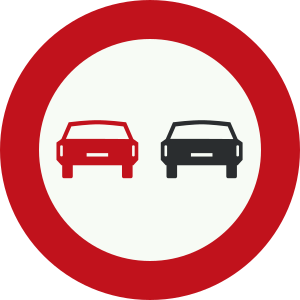
Many learners think: The overtaking-ban sign (F1) belongs to category C, because it is a round sign with a red border like the other prohibition signs.

The rule is: F1 is listed literally under 'Other commands and prohibitions', not under chapter C 'Closure'. Appearance does not determine the classification

Challenge

You count five signs and think: five categories. But further on there is yet another round sign with a red border — the overtaking ban. Your first reflex: 'another prohibition sign, so category C, same as before.' The CBR exam designer knows that shape and category diverge here.

Read this section on its own page: Challenge: The seven categories of traffic signs (appendix 1)

The model

A speed, B priority (yellow diamond), C closure, D direction (blue), F other commands/prohibitions, J warning (triangle), L information (blue rectangle). The overtaking ban looks like C, but is listed in chapter F.

Read this section on its own page: The model: The seven categories of traffic signs (appendix 1)

Core

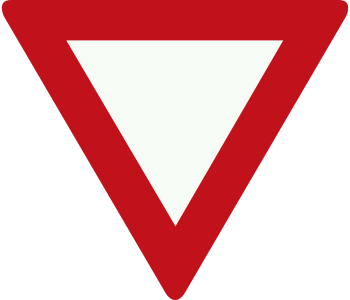
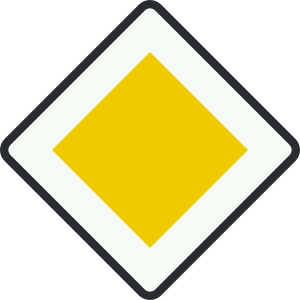
Road users are legally required to comply with traffic signs that contain a command or prohibition — that applies to categories B, C, D and F. Category B (priority) has its own shape: the yellow diamond, not a triangle. B1 is the priority road, B6/B7 regulate priority at an intersection. Category C (closure) and category F (other commands/prohibitions) both look round and red-and-white — same appearance, different chapters. The overtaking ban (F1) belongs to F, not C, however prohibition-like it looks. Category D (direction) is also round, but blue: a command, not a prohibition — for example D1 roundabout. Category J (warning) is the triangle with a red border, and category L (information) the blue rectangle — neither carries the the law command/prohibition duty, purely warning or informing.

Read this section on its own page: Core: The seven categories of traffic signs (appendix 1)

Why it matters

The category determines not only how this atom explains a sign, but also whether the sign is binding. A J-warning sign (poor road surface) asks for alertness, not obedience; violating a C- or F-prohibition sign is a real offence. Someone who goes by shape alone and confuses the overtaking ban with an ordinary C-prohibition category doesn't miss the meaning — everyone gets that — but does miss the system behind exam questions that test the appendix-1 classification itself.

Read this section on its own page: Why it matters: The seven categories of traffic signs (appendix 1)

Active recall

At roadworks on the N35 near Enschede you see a round sign with a red border: two cars side by side, one of them crossed out. Which appendix-1 category does this overtaking ban belong to?

Read this section on its own page: Active recall: The seven categories of traffic signs (appendix 1)

Teach back

Explain: why is the overtaking ban not in category C, even though it looks the same as a C sign?

Read this section on its own page: Teach back: The seven categories of traffic signs (appendix 1)

Memory hook

A speed · B diamond-priority · C closure · D round-blue-command · F other (incl. overtaking ban!) · J triangle-warning · L rectangle-info. Round+red ≠ automatically C.

Read this section on its own page: Memory hook: The seven categories of traffic signs (appendix 1)

Source: RVV 1990 art. 62 · checked 2026-10-22

The picture

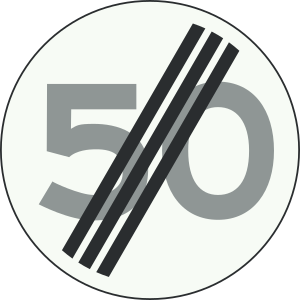
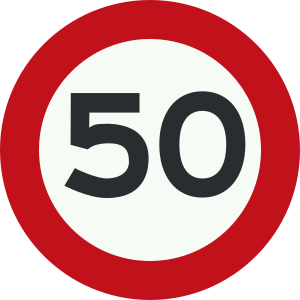
Appendix 1: which shape belongs to which category?Shape & colourExample signA — Speedround, white, red border, digitA1 speed limitB — Priorityyellow diamondB1 priority roadC — Closureround, white/redC1 closed both directionsD — Directionround, blueD1 roundaboutF — Other commands/prohibitionsround, white/red (same look as C, different chapter)F1 overtaking banJ — Warningtriangle, point up, red borderJ1 poor road surfaceL — Informationrectangle, blueL2 pedestrian crossing
What to look at: Seven appendix-1 categories with shape, colour and example sign: A speed, B priority, C closure, D direction, F other commands/prohibitions (incl. overtaking ban F1), J warning, L information.

Signs and law

Test yourself

On your way to work in Enschede, within two minutes you pass five different signs: a speed limit, a yellow diamond, a round prohibition sign, a blue roundabout arrow, and a blue rectangular sign with a bus-stop icon. How many different categories are you actually looking at there?

Show the answer

A speed, B priority (yellow diamond), C closure, D direction (blue), F other commands/prohibitions, J warning (triangle), L information (blue rectangle). The overtaking ban looks like C, but is listed in chapter F.

Exam questions on this topic

About The seven categories of traffic signs (appendix 1): which statement is correct?

  1. Command signs (round, blue) are a separate category from category C (round, red border).
  2. A traffic sign with a command or prohibition is a strong recommendation, not a hard requirement.
  3. The overtaking-ban sign (F1) belongs to category C, because it is a round sign with a red border like the other prohibition signs.
  4. The priority-road sign (B1) is a triangle, just like a warning sign.
Show the answer

Correct answer: Command signs (round, blue) are a separate category from category C (round, red border).

Command signs (round, blue) are a separate category from category C (round, red border). Round only tells you 'command or prohibition', not which of the two

Why learners get this wrong: A traffic sign with a command or prohibition is a strong recommendation, not a hard requirement.

Open this question

About The seven categories of traffic signs (appendix 1): which statement is WRONG?

  1. Every round traffic sign is a prohibition sign.
  2. F1 is listed literally under 'Other commands and prohibitions', not under chapter C 'Closure'.
  3. B1 (priority road) has its own yellow diamond shape, not a triangle.
  4. Road users are required to comply with traffic signs that contain a command or prohibition.
Show the answer

Correct answer: Every round traffic sign is a prohibition sign.

Command signs (round, blue) are a separate category from category C (round, red border). Round only tells you 'command or prohibition', not which of the two

Why learners get this wrong: The overtaking-ban sign (F1) belongs to category C, because it is a round sign with a red border like the other prohibition signs.

Open this question

About The seven categories of traffic signs (appendix 1): which statement is WRONG?

  1. F1 is listed literally under 'Other commands and prohibitions', not under chapter C 'Closure'.
  2. The priority-road sign (B1) is a triangle, just like a warning sign.
  3. Command signs (round, blue) are a separate category from category C (round, red border).
  4. Road users are required to comply with traffic signs that contain a command or prohibition.
Show the answer

Correct answer: The priority-road sign (B1) is a triangle, just like a warning sign.

B1 (priority road) has its own yellow diamond shape, not a triangle. The triangle with a red border is the appearance of category J (warning)

Why learners get this wrong: The overtaking-ban sign (F1) belongs to category C, because it is a round sign with a red border like the other prohibition signs.

Open this question

B1 (priority road) has its own yellow diamond shape, not a triangle.

  1. False
  2. True
Show the answer

Correct answer: True

B1 (priority road) has its own yellow diamond shape, not a triangle. The triangle with a red border is the appearance of category J (warning)

Why learners get this wrong: The priority-road sign (B1) is a triangle, just like a warning sign.

Open this question

About The seven categories of traffic signs (appendix 1): which statement is WRONG?

  1. Command signs (round, blue) are a separate category from category C (round, red border).
  2. F1 is listed literally under 'Other commands and prohibitions', not under chapter C 'Closure'.
  3. B1 (priority road) has its own yellow diamond shape, not a triangle.
  4. Information signs (category L) are also legally binding, just like command and prohibition signs.
Show the answer

Correct answer: Information signs (category L) are also legally binding, just like command and prohibition signs.

Only command/prohibition signs fall under the statutory duty to comply. Category L (information) is not legally binding

Why learners get this wrong: Every round traffic sign is a prohibition sign.

Open this question

Only command/prohibition signs fall under the statutory duty to comply.

  1. False
  2. True
Show the answer

Correct answer: True

Only command/prohibition signs fall under the statutory duty to comply. Category L (information) is not legally binding

Why learners get this wrong: Information signs (category L) are also legally binding, just like command and prohibition signs.

Open this question

At roadworks on the N35 near Enschede you see a round sign with a red border: two cars side by side, one of them crossed out. Which appendix-1 category does this overtaking ban belong to?

  1. Category C — closure, because it is a round prohibition sign
  2. Category F — other commands and prohibitions
Show the answer

Correct answer: Category F — other commands and prohibitions

Shape (round, red border) matches C, but F1 is listed literally in appendix 1, chapter F.

Why learners get this wrong: The overtaking-ban sign (F1) belongs to category C, because it is a round sign with a red border like the other prohibition signs.

Open this question

About The seven categories of traffic signs (appendix 1): which statement is correct?

  1. Road users are required to comply with traffic signs that contain a command or prohibition.
  2. Every round traffic sign is a prohibition sign.
  3. The priority-road sign (B1) is a triangle, just like a warning sign.
  4. The overtaking-ban sign (F1) belongs to category C, because it is a round sign with a red border like the other prohibition signs.
Show the answer

Correct answer: Road users are required to comply with traffic signs that contain a command or prohibition.

Road users are required to comply with traffic signs that contain a command or prohibition. That is a statutory duty, not advice

Why learners get this wrong: Every round traffic sign is a prohibition sign.

Open this question

A traffic sign with a command or prohibition is a strong recommendation, not a hard requirement.

  1. False
  2. True
Show the answer

Correct answer: False

Road users are required to comply with traffic signs that contain a command or prohibition. That is a statutory duty, not advice

Why learners get this wrong: A traffic sign with a command or prohibition is a strong recommendation, not a hard requirement.

Open this question

About The seven categories of traffic signs (appendix 1): which statement is WRONG?

  1. Command signs (round, blue) are a separate category from category C (round, red border).
  2. A yellow diamond-shaped sign belongs to category A (speed).
  3. B1 (priority road) has its own yellow diamond shape, not a triangle.
  4. F1 is listed literally under 'Other commands and prohibitions', not under chapter C 'Closure'.
Show the answer

Correct answer: A yellow diamond-shaped sign belongs to category A (speed).

Category A (speed) consists of round signs (A1, A2...); the yellow diamond shape is unique to category B (priority, sign B1)
Why learners get this wrong: Every round traffic sign is a prohibition sign.

Open this question

All practice questions of this topic

Frequently asked questions

‘The overtaking-ban sign (F1) belongs to category C, because it is a round sign with a red border like the other prohibition signs’ – is that true?

No. F1 is listed literally under 'Other commands and prohibitions', not under chapter C 'Closure'. Appearance does not determine the classification

‘Every round traffic sign is a prohibition sign’ – is that true?

No. Command signs (round, blue) are a separate category from category C (round, red border). Round only tells you 'command or prohibition', not which of the two

‘The priority-road sign (B1) is a triangle, just like a warning sign’ – is that true?

No. B1 (priority road) has its own yellow diamond shape, not a triangle. The triangle with a red border is the appearance of category J (warning)

‘A traffic sign with a command or prohibition is a strong recommendation, not a hard requirement’ – is that true?

No. Road users are required to comply with traffic signs that contain a command or prohibition. That is a statutory duty, not advice

‘A yellow diamond-shaped sign belongs to category A (speed)’ – is that true?

No. Category A (speed) consists of round signs (A1, A2...); the yellow diamond shape is unique to category B (priority, sign B1)
Related topics

Open in the app